


What 2025 Injury Data Tells Us and What Smart PPE Can Do About It
As we begin 2026, the Health and Safety Executive (HSE) has released its latest annual statistics on workplace injury and ill health in the UK. The numbers once again highlight a familiar reality for high-risk industries like construction, utilities, manufacturing, and field services: serious incidents are still happening far too often, and many are never fully captured.
At Quin, we believe these statistics shouldn’t just be reported; they should be used. Used to improve safety outcomes, strengthen PPE design, and ultimately save lives.
What the Data Shows
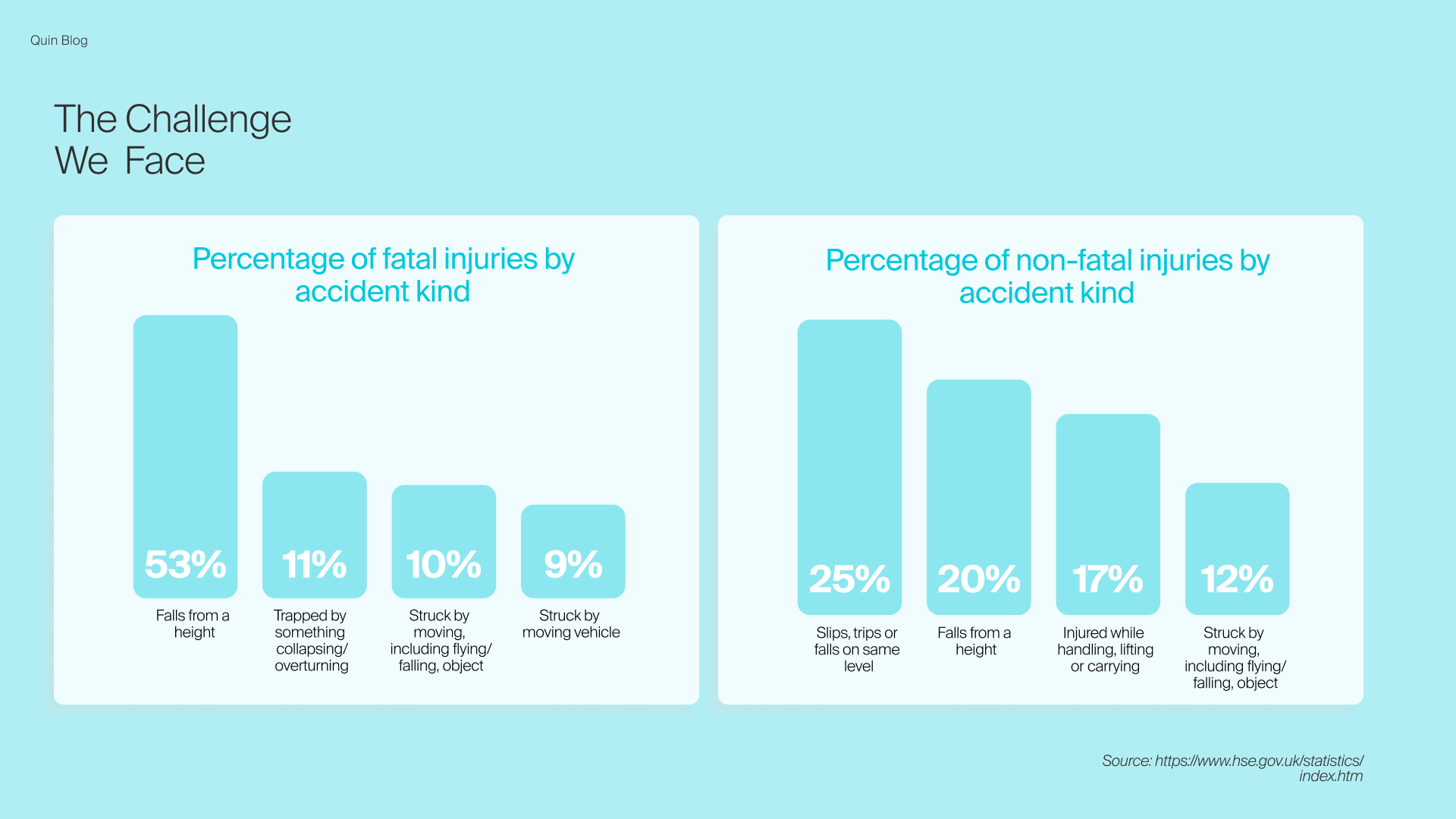
Below statistics in the UK according to HSE’s latest figures:
- 35 workers were killed in construction-related incidents in 2024/25, with falls from height accounting for 53% of fatalities
- 50,000 non-fatal injuries were sustained by construction workers on average, with 29% resulting in over 7 days off work in construction
- Across all industries, 124 workers lost their lives in work-related accidents in 2024/25, and 680,000 non-fatal injuries were self-reported
- Slips, trips, falls, falls from height, and being struck by objects remain among the most common types of accidents.
These are not abstract numbers. Each represents a moment where something went wrong - often suddenly, often without warning.
From Detection to Rapid Response
This is where Smart PPE changes the equation.
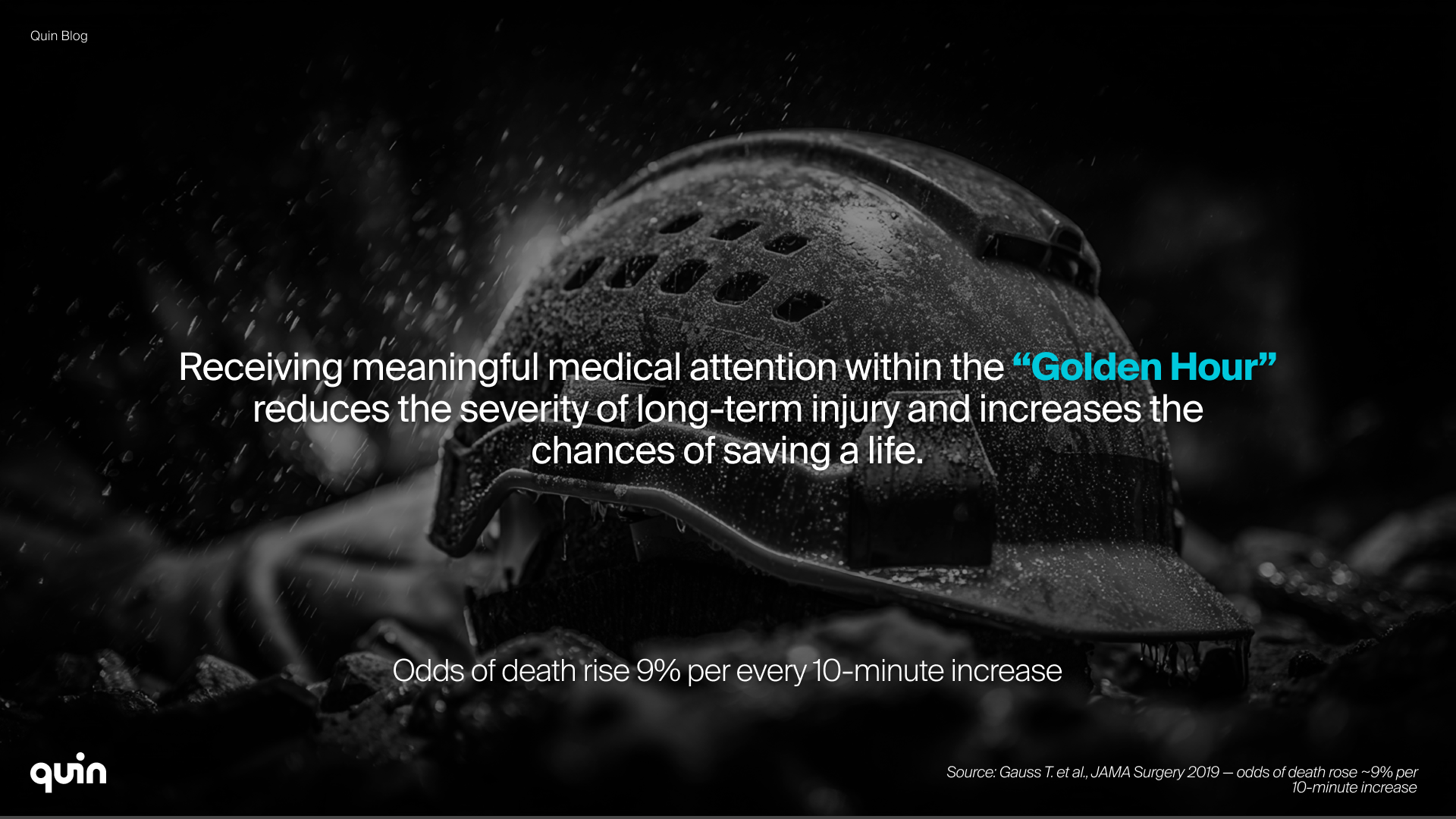
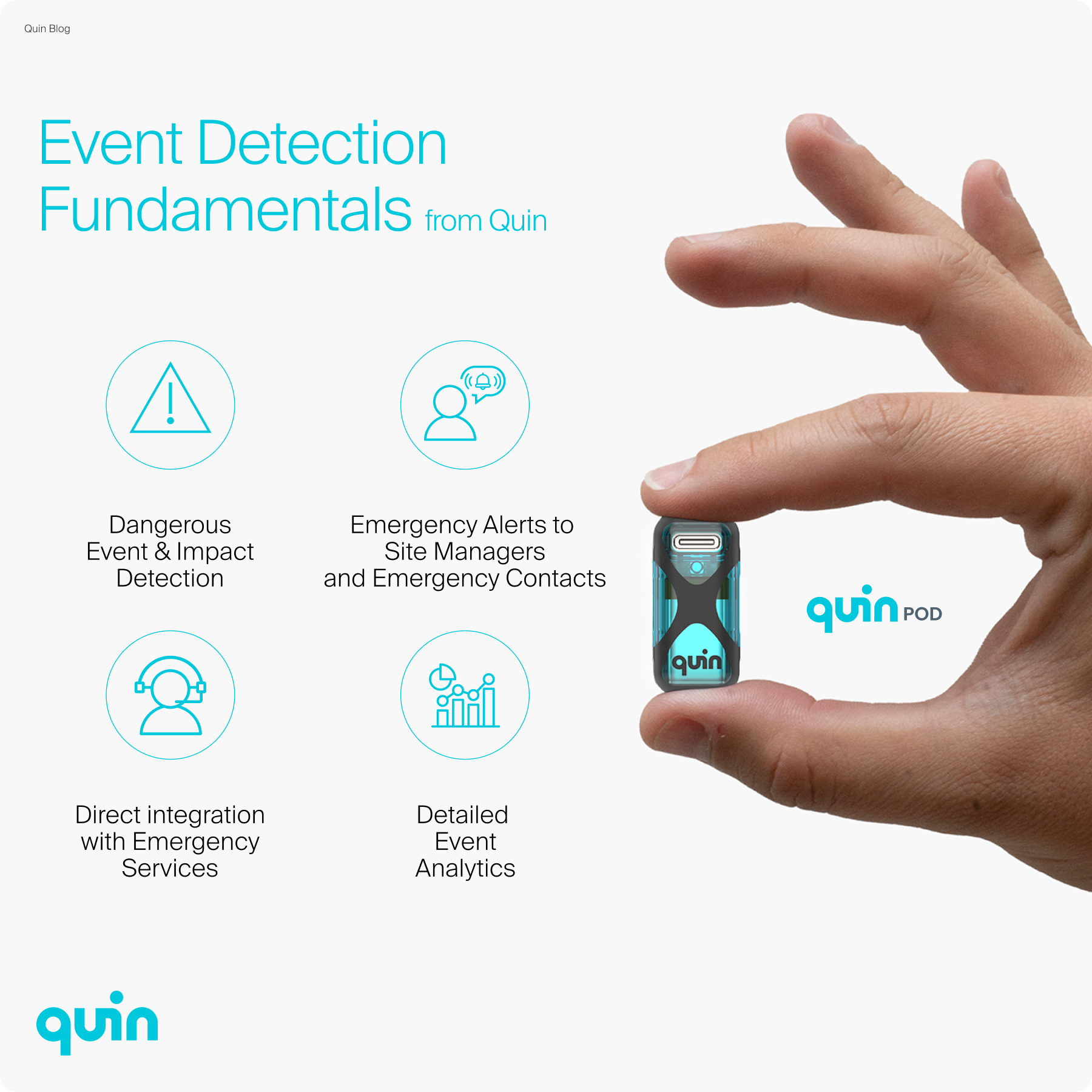
The Quin Pod is designed to detect the accident types that dominate today's injury statistics, including falls from height, slips, trips, and other sudden-impact events. When a dangerous event occurs, Quin doesn’t wait for someone to raise the alarm.
The system is designed to automatically:
- Detect the incident
- Trigger alerts to the workers' designated emergency contacts & professional emergency services
- Call for assistance in real-time
- Record and register critical information around the accident or event.
For a lone worker, this can be the difference between waiting unnoticed and receiving rapid assistance. On a busy site, this means safety managers or on-site medical teams are alerted immediately, without relying on witnesses to relay the story or to see and assess the incident and seek help.
Why the Official Numbers Only Tell Half the Story
Even with robust reporting systems, the HSE is clear that non-fatal injuries are substantially under-reported, particularly for non-employees and the self-employed construction workers. In fact, HSE explicitly cautions that RIDDOR data must be “interpreted with care” due to known under-reporting.
Independent research and industry estimates regularly suggest that as many as half of non-fatal workplace incidents may never be formally recorded. That means risks go unseen, patterns are missed, and opportunities to improve safety are lost.
Better Data, Not Big Brother
Quin’s approach isn’t about monitoring individuals - it’s about understanding risk, establishing parameters, and getting people help when it matters most.
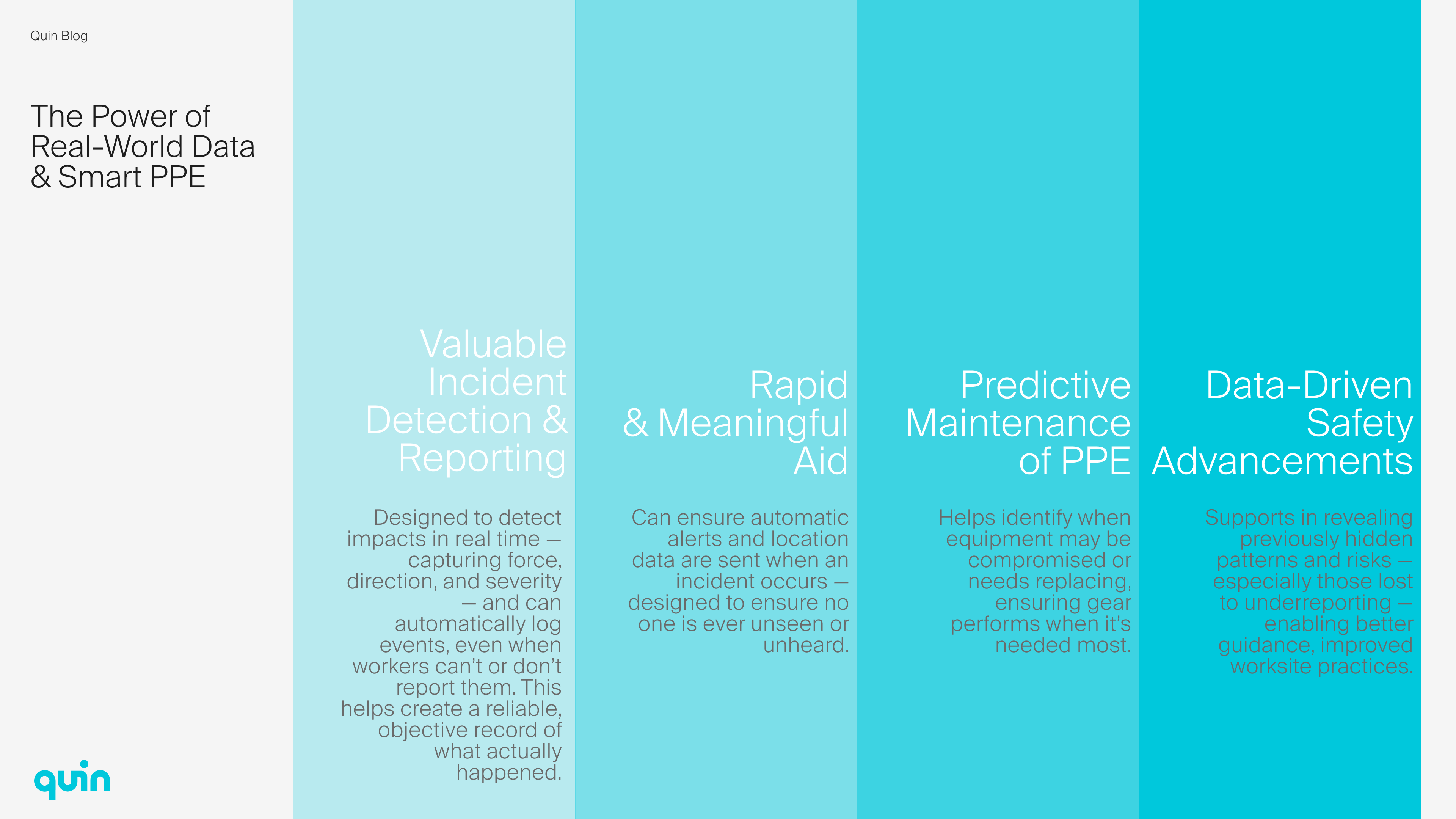
By automatically detecting and recording incidents, Quin helps create a more complete, anonymised picture of what’s really happening on worksites. This data allows:
- Employers to identify recurring hazards
- Safety teams to make evidence-based improvements
- PPE manufacturers to design equipment based on real-world conditions, not assumptions.
Turning Insight into Impact
HSE estimates that workplace injury and ill health cost the UK economy £22.9 billion annually, with £6.5 billion linked directly to injuries. Beyond cost, the human impact is immeasurable.
Intelligent PPE offers a path forward, one where:
- Incidents are detected instantly
- Help arrives rapidly and is informed with the correct data to help on scene
- Near misses, minor events, and gear usage can be tracked to highlight potential preventative opportunities
- Data reflects reality, not gaps
- Safety decisions are driven by evidence.
media credit by ddskjdsj
At Quin, our mission is simple: use real-world data to reduce injuries and save lives. As the industry looks ahead, better visibility isn’t just helpful - it’s essential.
By combining trusted industry reporting with anonymised, real-time incident data captured directly from the job site, Quin helps build a more complete and reliable picture of risk. Over time, this growing body of insight will enable employers, safety professionals, and PPE manufacturers to make better-informed decisions; improving worksites, refining equipment, and raising safety standards across the industry.
Subscribe to the Quin Safety Intelligence Newsletter for more PPE insights