

How Intelligent Safety Shoes Can Detect Falls and Raise the Alarm
Safety footwear is one of the most familiar forms of PPE across construction and industrial workplaces. Workers depend on it throughout the day as they move through environments where uneven surfaces, falling objects, machinery, and work at height can all create risk.
For years, safety footwear has focused on physical protection. If a dangerous event occurred, the shoe could not tell anyone what had happened, raise the alarm if the worker needed help, or provide safety teams with objective information about the event.
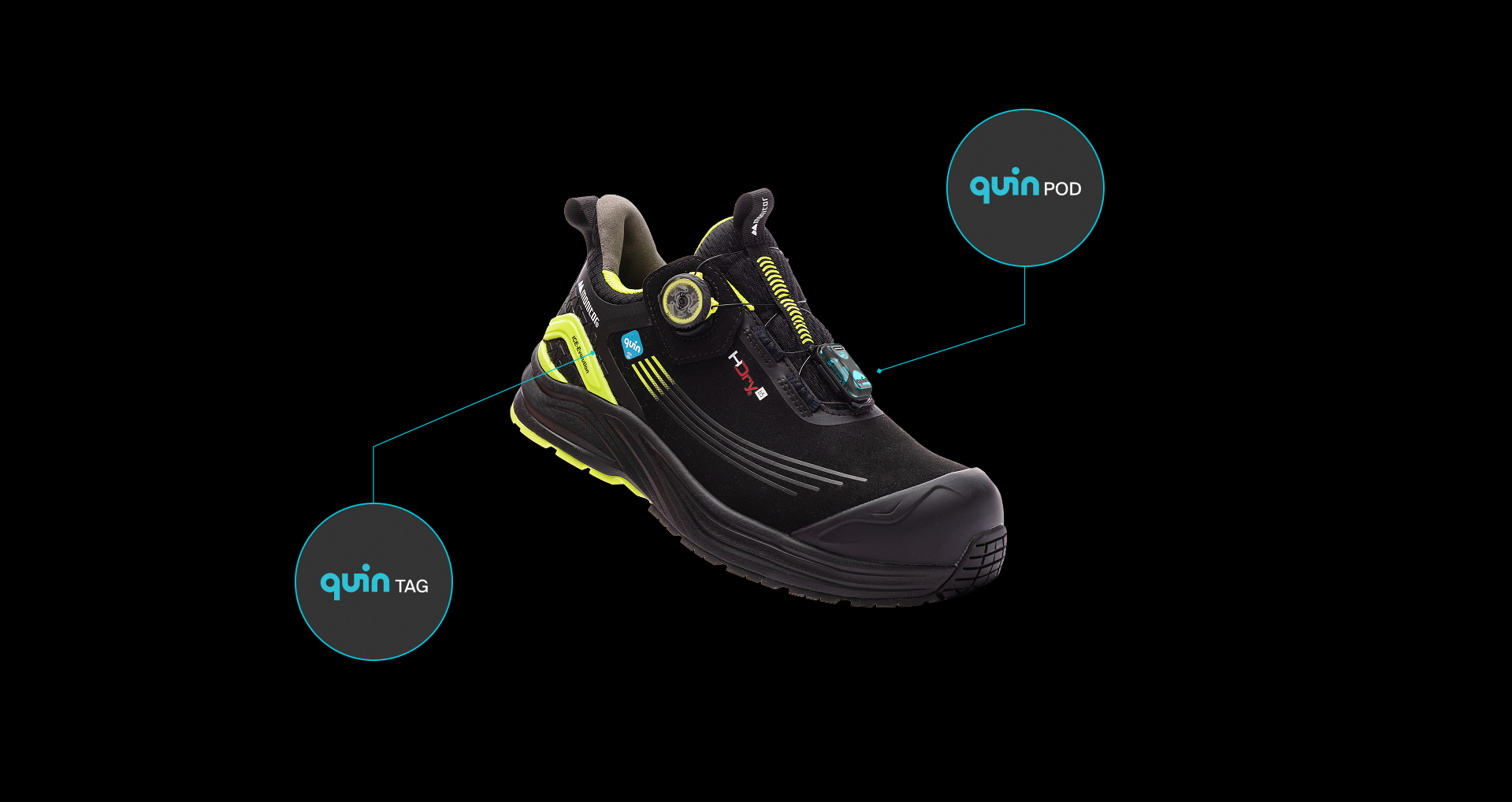
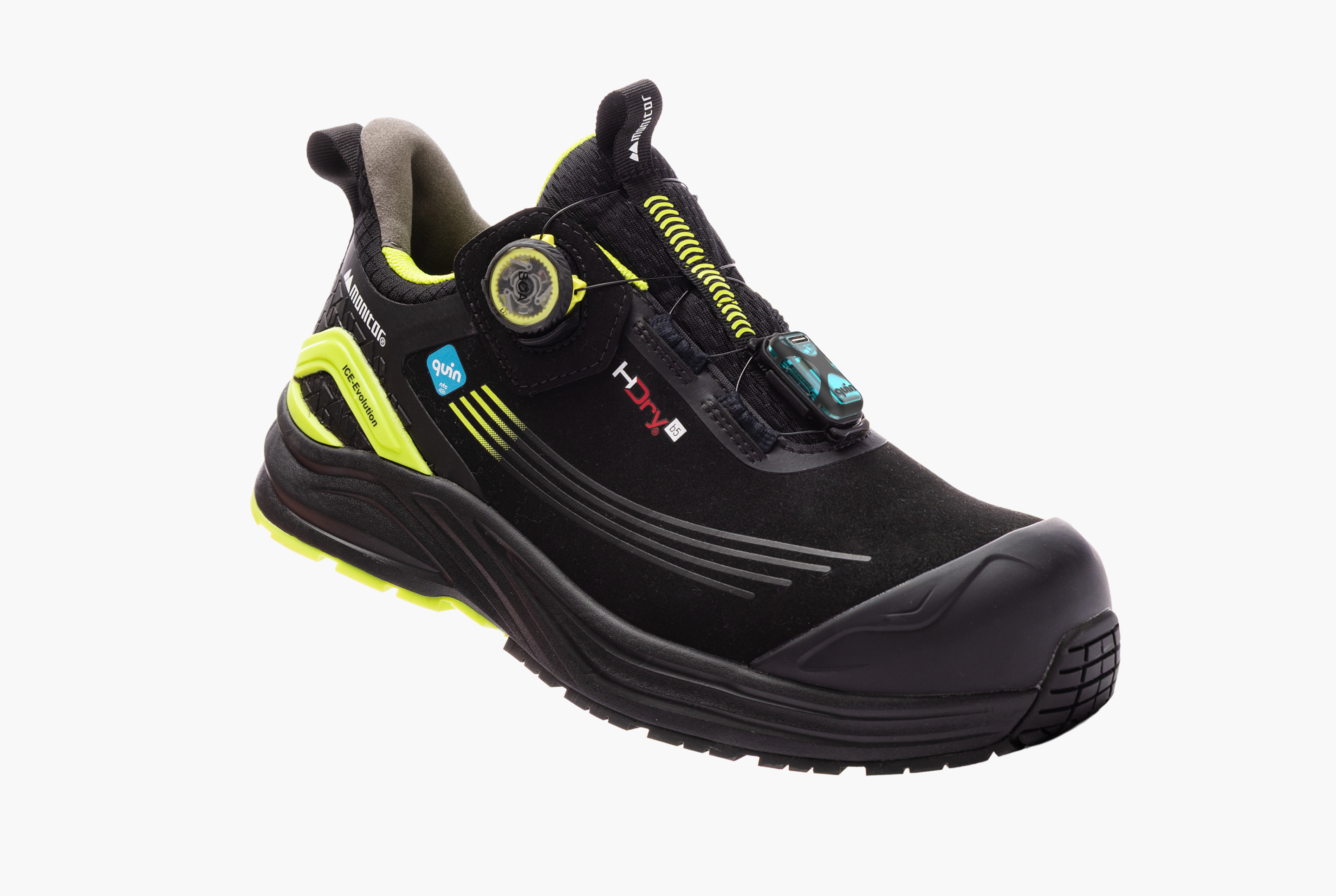
That is starting to change. Quin technology is now built into Monitor safety shoes, bringing connected detection, alerts, data, and analytics to PPE workers already wear. This is not a future concept. Quin-equipped Monitor safety shoes exist, and workers wear them today.
Why falls from height remain a critical safety issue
Falls from height continue to cause serious and fatal injuries across British workplaces. The latest provisional figures from the Health and Safety Executive show that 31 workers were killed following falls from height during 2025/26. This represented around a quarter of all worker fatalities and made falls from height the most common cause of fatal workplace injury during the year.
The non-fatal figures show a wider problem. Falls from height accounted for 8 per cent of employer-reported non-fatal injuries under RIDDOR during 2024/25. Slips, trips, or falls on the same level accounted for a further 30 per cent. These figures show why organisations need to consider not only how to prevent falls, but also what happens in the moments after one occurs.
Connected safety footwear does not replace risk assessments, training, fall-protection equipment, or fall-prevention controls. Its role begins when a dangerous event happens, creating an opportunity to recognise the incident and start the alert process when the worker may be unable to call for help.
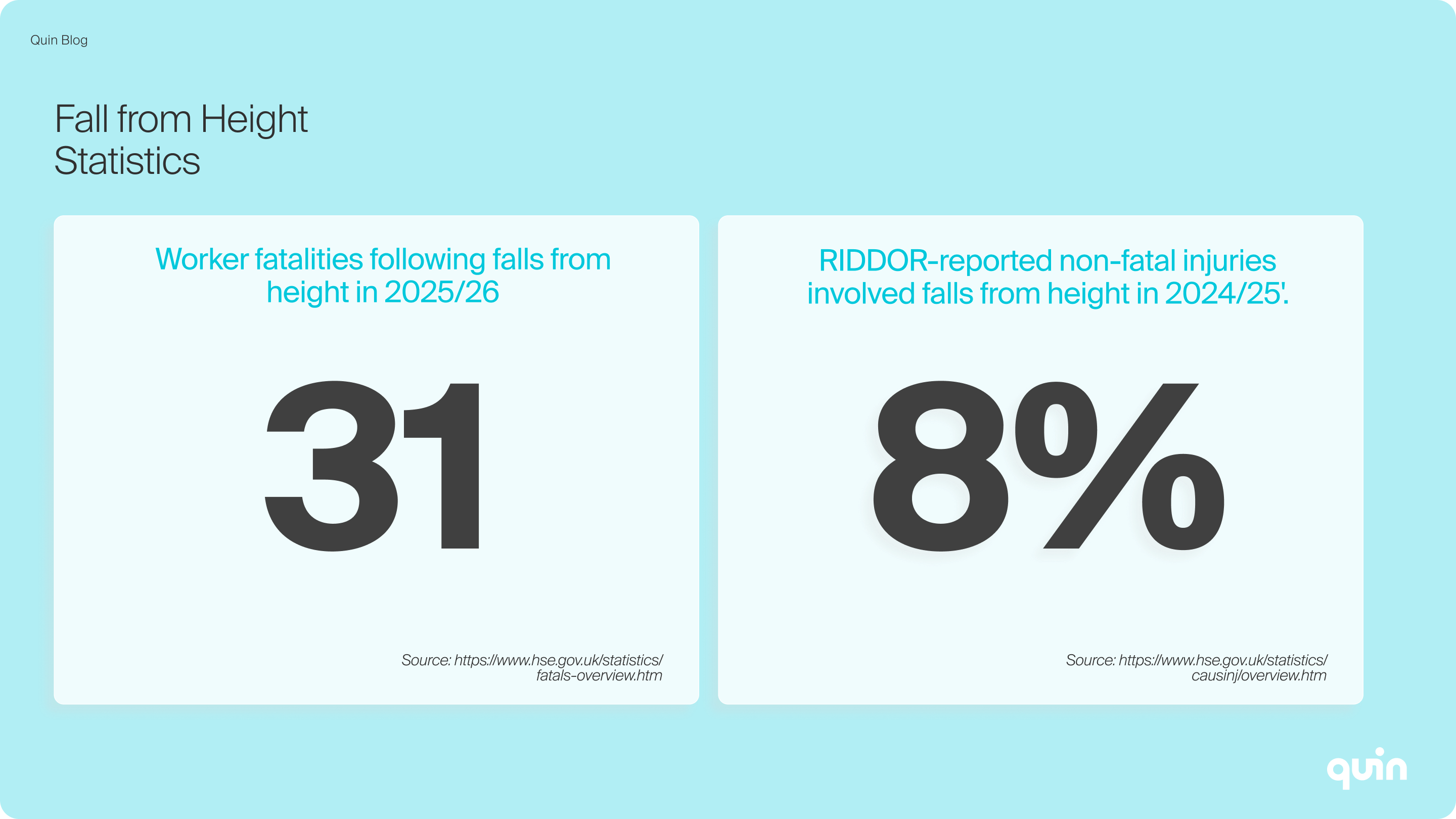
HSE fatal injury statistics for 2025/26 and HSE non-fatal injury statistics for 2024/25
What changes when technology reaches the shoe?
The Quin Pod built into Monitor safety footwear performs the same core functions as Quin technology within a helmet. It can detect dangerous events, raise alerts, and provide relevant event data and analytics through the Quin Within app.
One key footwear application is recognising a fall from height. When a Quin Pod is built into a safety shoe, it can detect the fall as a dangerous event and begin the alert process. This creates a direct connection between the incident the worker experiences and the people who may need to respond.
Why does that matter? After a fall, we cannot assume a worker will be able to reach a phone, explain their location, or describe what happened. They may be unconscious, disoriented, immobilised, or working in an area where the incident is not immediately visible. Connected footwear also helps the equipment detect when something has gone wrong.
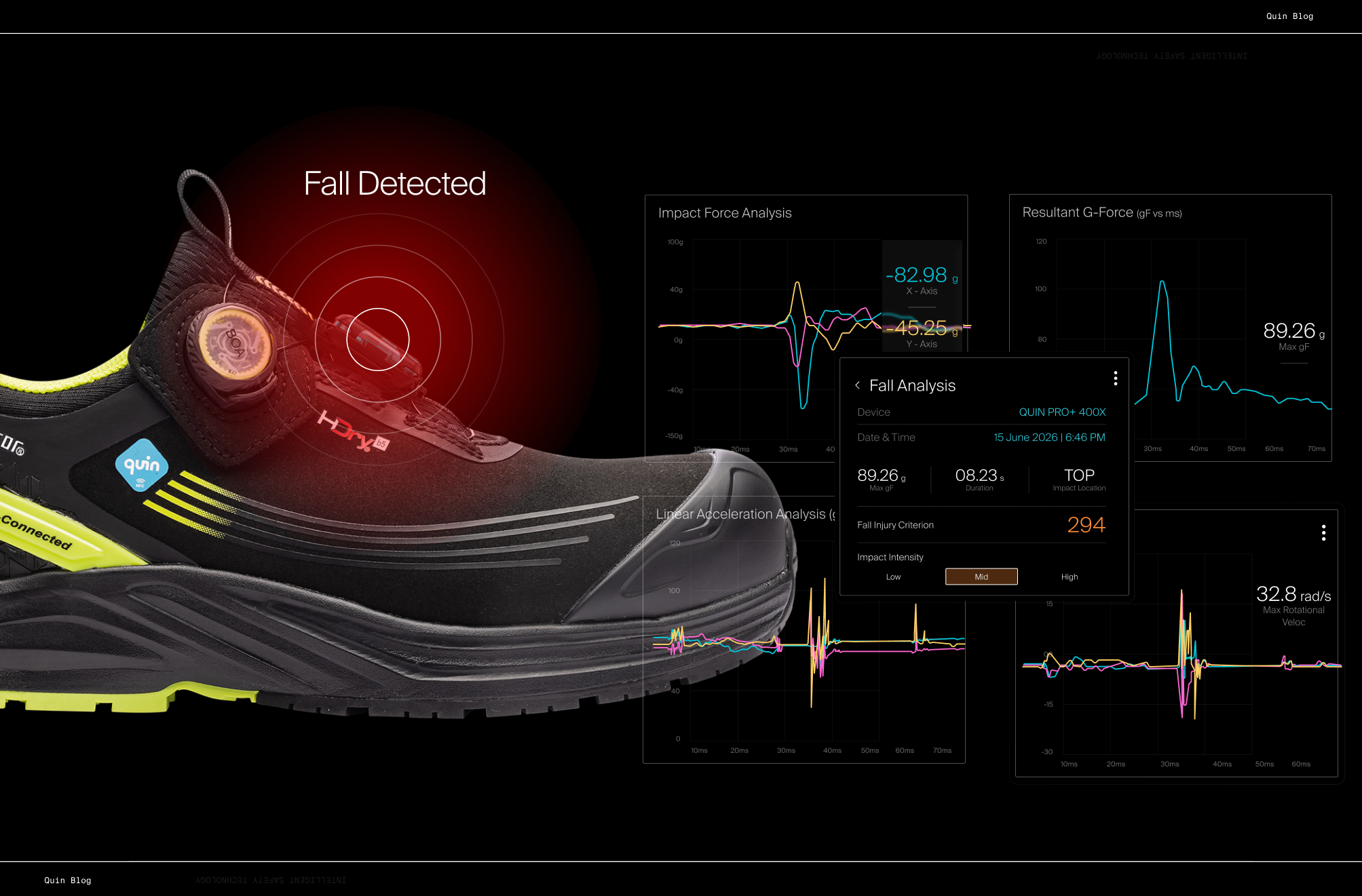
Raising the alarm when the worker cannot
Many workplace response procedures still depend on somebody witnessing an incident or the injured worker calling for assistance. That system becomes vulnerable when a fall happens out of sight, during lone working, or across a large and complex site.
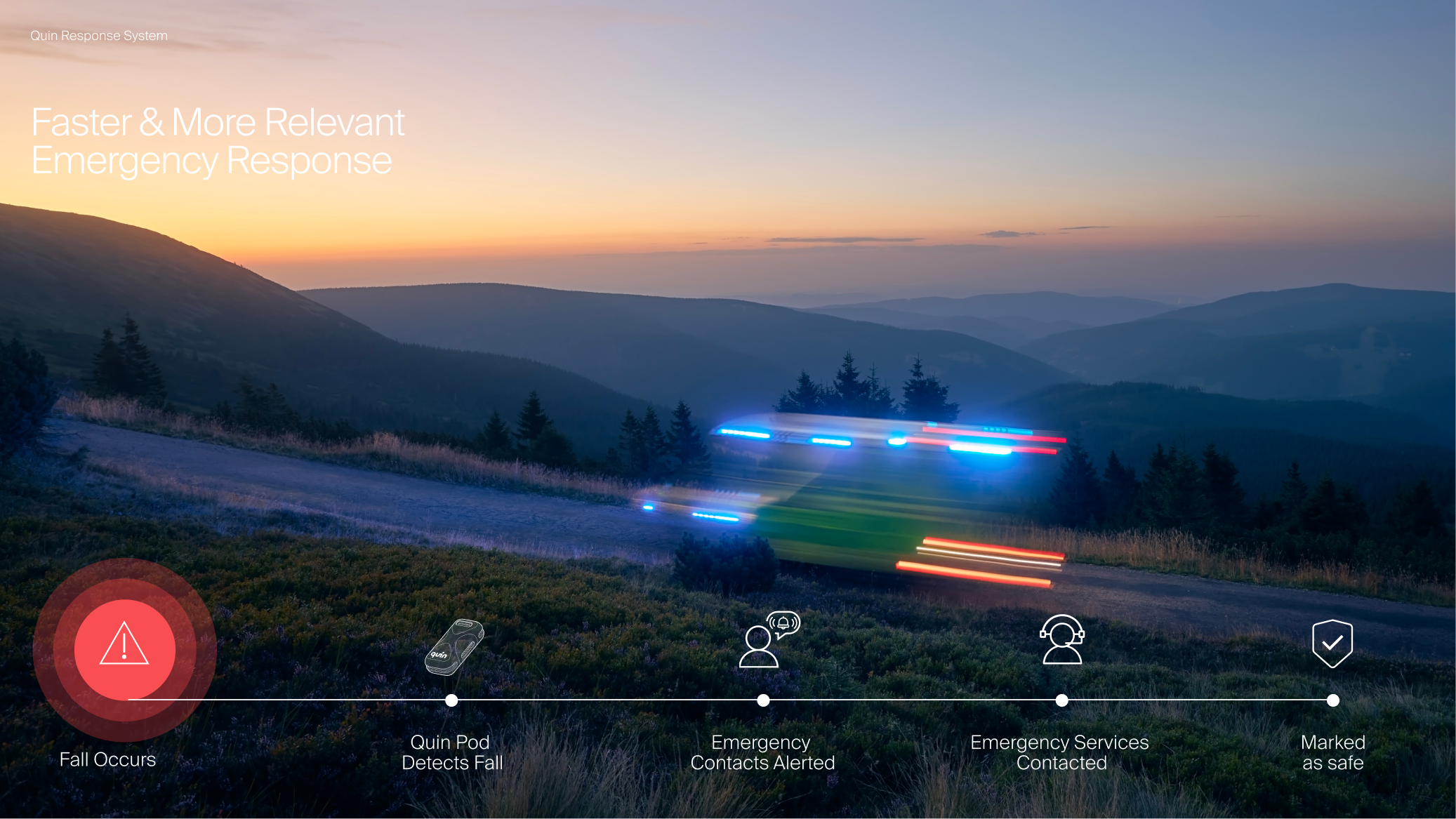
When the Quin Pod detects a dangerous event, it works with the Quin Within app to raise an alert to the worker's chosen emergency contacts. This means the Pod can support the alert process without the Quin Tag. Contacts can receive key incident information, supporting an earlier, more informed response.
This does not remove people from the response process. It helps ensure that the process can begin even when the worker cannot start it themselves. On a busy site or in a remote working area, closing that gap between an incident and the first alert could make a real difference.
How the Pod, app, and Tag support the worker
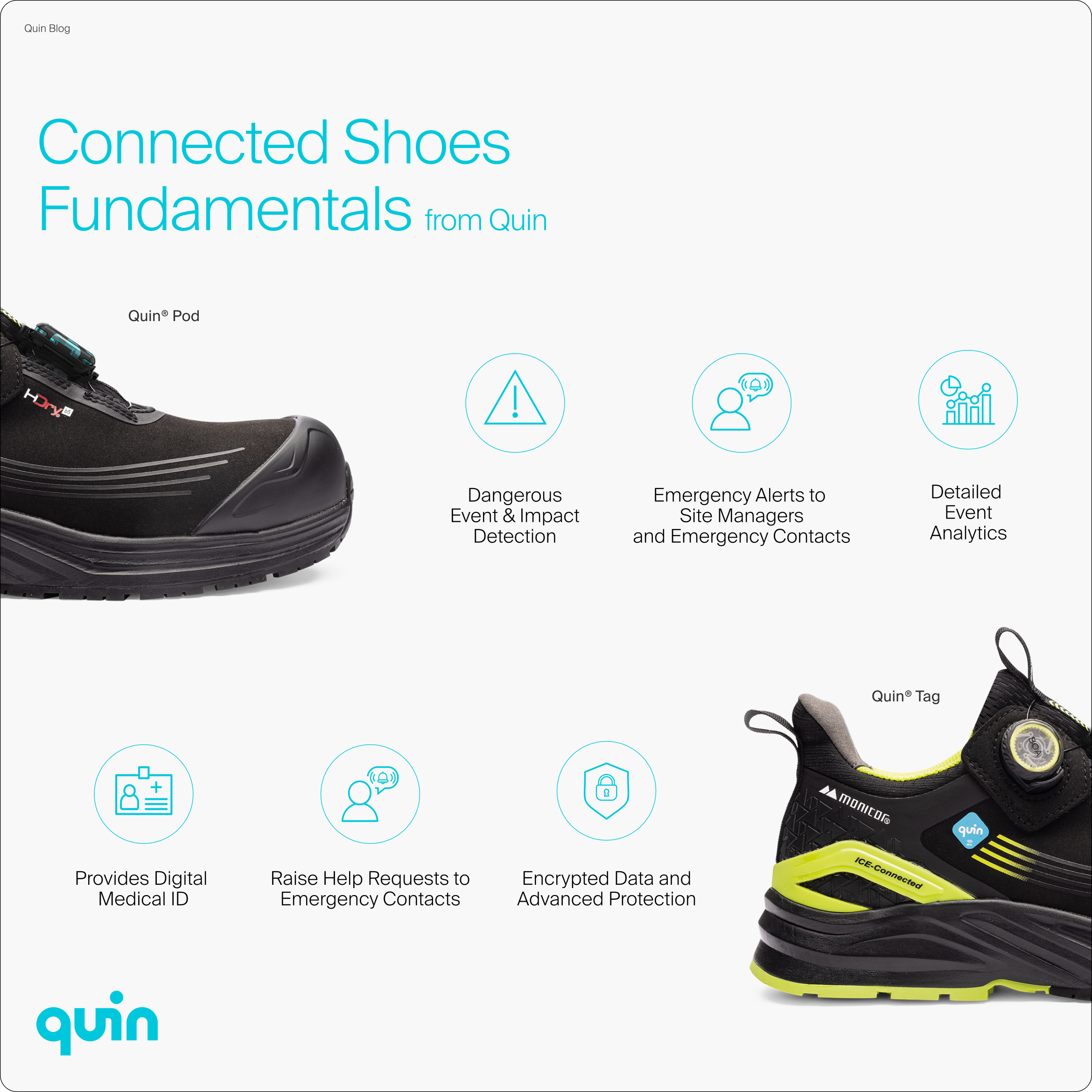
The Quin Pod and the Quin Within app provide the core connected functions. The Pod detects the dangerous event and captures the relevant data. Through the app, the system can then raise an alert and share information with the worker's chosen emergency contacts.
The Quin Within app is the essential companion for the Pod and Tag, delivering alerts, critical information, and impactful insights. It also lets the worker manage connected equipment, emergency contacts, and Digital Medical ID.
The Quin Tag adds a separate layer of support. If a worker is injured and unable to communicate, someone assisting them can scan the Tag with a smartphone to access the Digital Medical ID information the worker has chosen to provide. The Tag is not required for the Pod to detect a dangerous event or for the connected alert process to begin.
This distinction matters. The Pod can recognise that something has happened and, through the Quin Within app, alert the worker's chosen emergency contacts. The Quin Tag can then help someone assisting the worker access relevant medical information when the worker cannot explain their needs.
Understanding what happened after a fall
An alert can start the response, but organisations also need to understand what happened. This can be difficult when nobody witnessed the fall or when the worker cannot clearly remember the event.
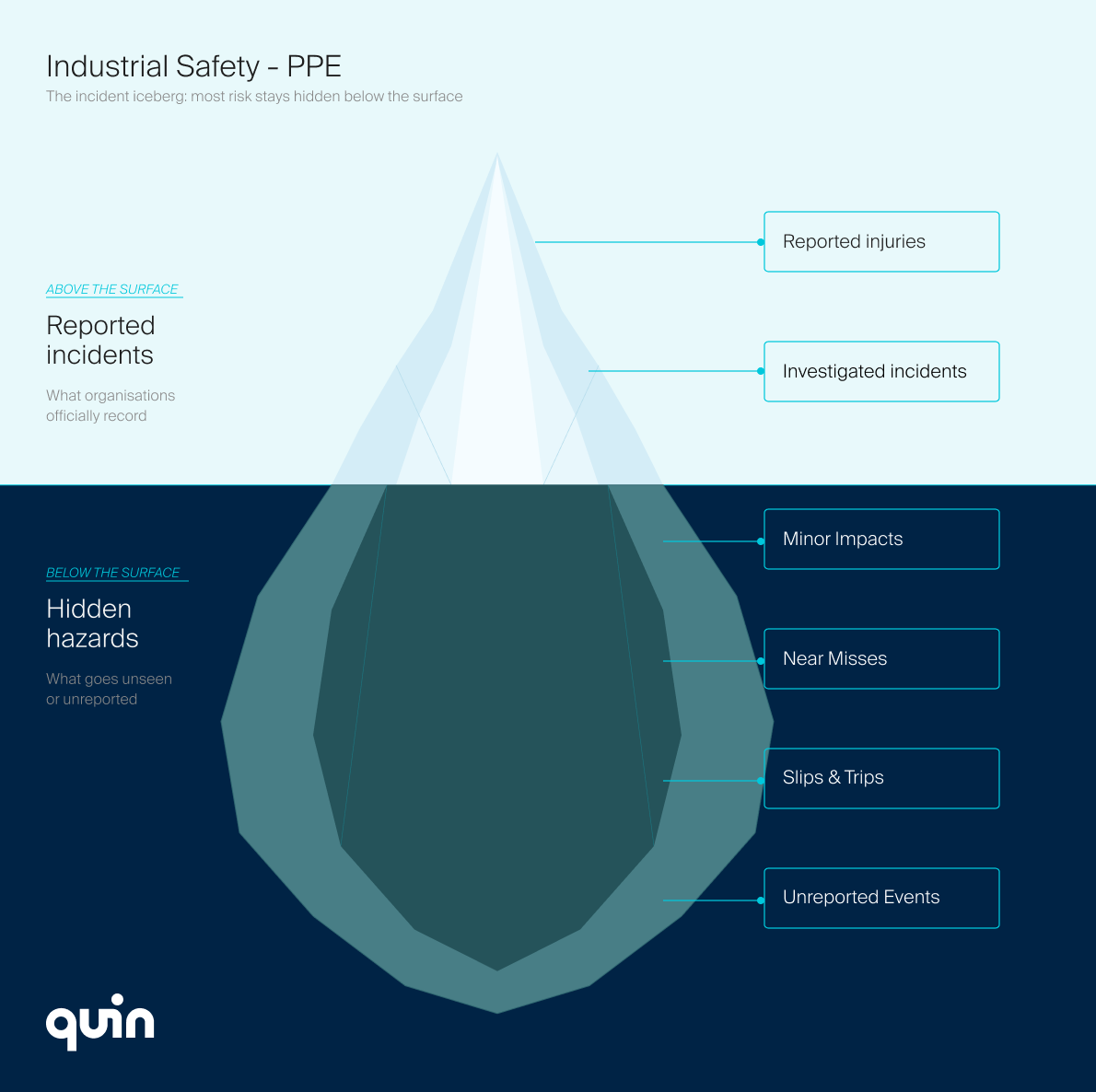
Traditional incident reviews often rely on recollection, observation, and information recorded after the event. These sources remain important, but they may not provide a complete picture. Connected safety footwear adds objective event data and analytics captured when the incident happens.
This information can give safety teams better context when they review an event. It can support questions about where and when the incident occurred, whether similar events are being detected, and whether a task, location, or working condition needs closer attention.
The purpose is not simply to create more data. It helps organisations understand dangerous events more clearly and use that knowledge to improve workplace safety.
Connected PPE that fits into the working day
Workplace technology is most useful when it fits into the way people already work. Safety shoes are worn throughout a shift and move with the worker across the workplace. Building Quin technology into the footwear means the detection capability sits within an item of PPE that is already part of the worker's routine.
Monitor safety shoes are designed around workplace performance, comfort, and physical protection. By adding the Quin Pod and Quin Tag, that footwear can now play a connected role when a dangerous event occurs.
The safety shoe's physical function remains central. Connected technology adds another layer by helping the footwear recognise an incident, raise an alert through the Quin Within app, and create information that can support the response and later review.
A wider role for connected PPE
Quin's work began with intelligent helmets, but its purpose has never stopped at head protection. Moving into safety footwear shows how the same connected approach can be applied across different forms of PPE.
For safety managers, this creates another opportunity to reduce the gap between what happens and what becomes known. For PPE manufacturers, it shows how established protective products can take on a connected role without losing their primary purpose.
Safety footwear has always helped protect workers. It can now also help recognise when something has gone wrong, raise the alarm, and provide the information needed to understand the event.
Workers already wear Quin-equipped safety shoes. Their arrival raises a wider question for the PPE sector: if the equipment workers wear can detect dangerous events and help connect them to support, what should we expect from the next generation of workplace protection?
To learn more about connected PPE, visit Quin within PPE and subscribe to the Quin Safety Intelligence Newsletter for further PPE insights.